
Building Scalable Microservices with Kubernetes
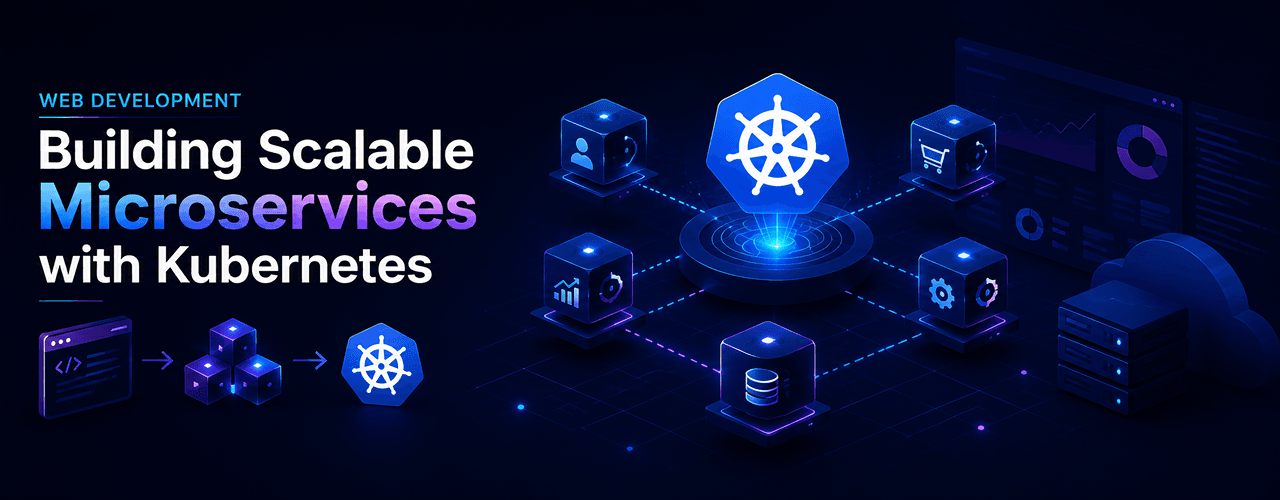
A comprehensive guide to architecting and deploying microservices that scale effortlessly with your business growth.
Modern applications demand scalability, resilience, and rapid deployment cycles. Kubernetes has emerged as the industry standard for orchestrating microservices, enabling organizations to manage distributed systems efficiently while maintaining high availability and performance.
Why Microservices Matter
Microservices architecture allows businesses to break large monolithic applications into smaller, independently deployable services. This improves maintainability, accelerates development cycles, and enables teams to scale individual components based on demand.
Organizations adopting microservices gain greater flexibility in technology choices, improved fault isolation, and the ability to deliver features faster without impacting the entire application ecosystem.
Kubernetes as the Backbone
Kubernetes simplifies container orchestration by automating deployment, scaling, networking, and service discovery. Developers can focus on building features while Kubernetes handles operational complexity behind the scenes.
Features like self-healing, rolling updates, horizontal scaling, and automated load balancing make Kubernetes an essential platform for modern cloud-native development.
Best Practices for Scalability
- Use stateless services wherever possible for easier scaling
- Implement health checks and readiness probes for reliability
- Leverage Horizontal Pod Autoscaling to handle traffic spikes
- Adopt centralized logging and monitoring solutions
- Use service meshes for traffic management and observability
Real-World Implementations
Companies like Netflix, Spotify, and Airbnb rely on containerized microservices to support millions of users globally. Kubernetes enables these organizations to maintain uptime, optimize infrastructure costs, and deploy updates continuously.
By combining Kubernetes with CI/CD pipelines, enterprises can achieve faster release cycles while reducing downtime and deployment risks.
Scalability is no longer optional — it’s the foundation of every successful digital platform.
— Michael Torres
Challenges in Adoption
While Kubernetes offers tremendous flexibility, it also introduces operational complexity. Teams must manage networking, security policies, resource allocation, and cluster maintenance effectively.
Successful adoption often requires strong DevOps practices, infrastructure automation, and continuous monitoring to ensure system stability.
The Future of Cloud-Native Development
As organizations continue their digital transformation journeys, Kubernetes will remain central to cloud-native infrastructure strategies. Emerging technologies like serverless containers and AI-driven monitoring will further simplify operations.
Businesses investing early in Kubernetes expertise and cloud-native tooling will gain a significant competitive advantage in scalability, resilience, and deployment speed.
