
Mobile-First Design: Best Practices for 2025
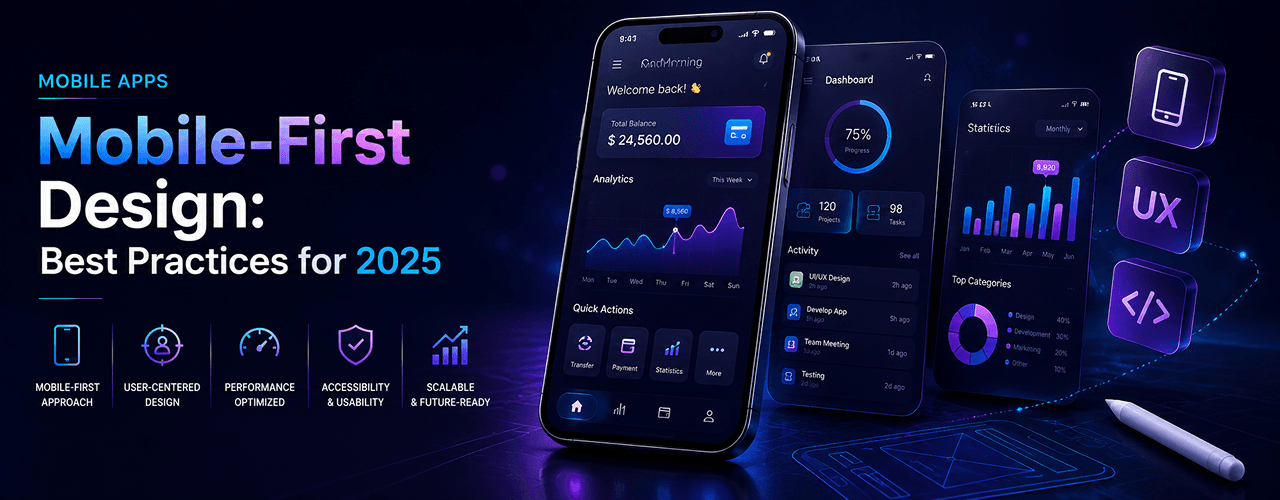
Creating responsive, mobile-optimized experiences that engage users and drive conversions.
With mobile devices accounting for the majority of global internet traffic, designing mobile-first experiences has become essential for businesses looking to improve engagement, usability, and customer retention.
The Shift Toward Mobile
Consumers expect fast, intuitive, and seamless experiences on smartphones and tablets. Businesses that fail to optimize for mobile often struggle with high bounce rates and lower conversions.
Mobile-first design focuses on creating streamlined user experiences for smaller screens before expanding layouts for desktops and larger devices.
Core Principles of Mobile-First Design
- Prioritize content hierarchy and readability
- Optimize touch interactions and navigation
- Use responsive layouts and scalable typography
- Improve loading speeds with optimized assets
- Design with accessibility and inclusivity in mind
Performance and User Experience
Fast-loading applications significantly improve user satisfaction and retention. Techniques like lazy loading, image optimization, and efficient caching strategies are crucial for delivering smooth mobile experiences.
Progressive Web Apps and modern frameworks also help businesses provide app-like interactions directly in the browser.
A mobile-first mindset is about delivering experiences users actually enjoy interacting with.
— Emma Johnson
Emerging Design Trends
Designers are increasingly adopting minimalist layouts, gesture-based navigation, and immersive animations to improve engagement. AI-driven personalization is also reshaping how users interact with mobile applications.
Dark mode optimization and adaptive interfaces continue to gain popularity across modern digital products.
Looking Ahead
As mobile technology evolves, businesses must continue prioritizing performance, accessibility, and responsive experiences. Devices will become more diverse, requiring even greater flexibility in UI and UX strategies.
Companies that embrace mobile-first development today will be better positioned to meet the expectations of tomorrow’s users.
